Source Self Leveling Cement Compound for Floors, Walls, and Roads
Compare 18 self leveling cement compound options from verified suppliers. Buyers can evaluate compressive strength, setting time, and special additives for residential, industrial, and commercial construction projects. These products offer fast-setting capabilities and high strength suitable for various applications including decorative concrete and infrastructure.
Key considerations
Products List


Comprehensive Sourcing Guide
Self Leveling Cement Compound Sourcing Guide
Procuring self-leveling cement compounds requires a disciplined approach to technical verification and supplier qualification. Buyers must distinguish between generic ready-mix concrete and specialized pre-mixed mortars designed for precise floor finishing. The market offers diverse formulations, ranging from high-strength industrial compounds to decorative residential solutions, each with distinct performance characteristics. Understanding these differences is critical for selecting the right material for specific construction projects.
This guide provides evidence-based procurement strategies for sourcing self-leveling cement compounds. It focuses on interpreting product listings, verifying technical specifications, and ensuring compliance with safety standards. By following these structured steps, procurement teams can mitigate risks associated with material failure, supply chain disruptions, and non-compliant products. The goal is to establish a reliable sourcing framework that supports long-term project success and operational efficiency.
Product Scope and Observed Listing Signals
The current market landscape for self-leveling cement compounds reveals a wide variety of product types and applications. Listings indicate the presence of ready-mix concrete, pre-mixed mortars, and cement mortars, each tailored for different construction needs. Applications span residential construction, commercial construction, industrial construction, and infrastructure projects. Some products are specifically designed for decorative concrete, while others focus on wear-resistant and moisture-proof functionalities for high-traffic areas.
Observed product attributes highlight key differentiators such as fast-setting properties, shrinkage-reducing additives, and fiber-reinforced compositions. Colors range from standard gray to customized options like green or red, catering to aesthetic requirements. Packaging varies from 25kg bags to palletized units, with some products offering free samples for evaluation. These signals help buyers identify suppliers who can meet specific project demands, whether for quick-dry applications or specialized insulation needs.
Technical Specifications to Verify
Technical verification is paramount when sourcing self-leveling cement compounds. Buyers should confirm compressive strength values, which can range from approximately 15-20 MPa to over 50 MPa after 28 days, depending on the product grade. Flexural strength is another critical metric, with some products exceeding 5 MPa or 6 MPa after curing. These values directly impact the durability and load-bearing capacity of the finished floor, making them essential for industrial and commercial applications.
Additional specifications include dry powder density, setting time, and fire resistance ratings. Products may exhibit a density of about 1.3kg/L and offer A1 fire resistance, ensuring safety in high-risk environments. Buyers should also verify the presence of special additives such as corrosion-inhibiting agents or self-leveling features. Understanding these technical parameters allows for accurate performance prediction and ensures the selected compound meets the structural and functional requirements of the project.
Compliance and Safety Documentation
Compliance with international standards is essential for ensuring product safety and performance. Buyers must verify that suppliers provide documentation confirming adherence to relevant construction and material standards. This includes certificates of analysis, test reports for compressive and flexural strength, and safety data sheets detailing handling and storage instructions. Proper documentation ensures that the materials meet regulatory requirements and can be safely used in various construction environments.
Safety considerations also extend to the chemical composition and environmental impact of the compounds. Products containing specific additives or high alumina content may require special handling procedures. Buyers should inquire about the refractoriness and thermal insulation properties, especially for applications involving high temperatures. Ensuring that suppliers provide comprehensive safety documentation helps mitigate risks and protects both workers and end-users from potential hazards associated with improper material use.
Cost Drivers and Commercial Terms
Cost drivers for self-leveling cement compounds include raw material prices, manufacturing complexity, and packaging requirements. Products with high compressive strength or specialized additives often command higher prices due to the additional processing and quality control involved. Packaging options, such as craft paper bags or palletized units, also influence the final cost. Buyers should consider the total cost of ownership, including transportation and handling, when evaluating supplier quotes.
Commercial terms such as minimum order quantities (MOQ) and lead times vary significantly among suppliers. MOQs can range from 1 to 1000 units, affecting inventory management and cash flow. Buyers should negotiate favorable terms that align with their project timelines and budget constraints. Additionally, the availability of free samples can help in making informed purchasing decisions without significant upfront investment. Understanding these commercial dynamics is crucial for effective procurement planning.
Supplier Qualification and Quality Control
Supplier qualification is a critical step in the sourcing process. Buyers should assess suppliers based on their production capabilities, quality control systems, and track record in the industry. Verifying the origin of the products, such as manufacturing in China or Ningbo, can provide insights into the supply chain reliability. Suppliers with established quality control processes are more likely to deliver consistent product quality, reducing the risk of defects and project delays.
Quality control measures should include regular testing of raw materials and finished products. Buyers should request evidence of batch-to-batch consistency and adherence to specified technical parameters. Engaging with suppliers who offer customization options can also enhance the sourcing strategy, allowing for tailored solutions that meet specific project requirements. Building strong relationships with qualified suppliers ensures a steady supply of high-quality self-leveling cement compounds.
Long-Term Procurement Checks
Long-term procurement success depends on continuous monitoring and evaluation of supplier performance. Buyers should establish key performance indicators (KPIs) to track delivery times, product quality, and customer service responsiveness. Regular audits and site visits can help verify that suppliers maintain their quality standards and comply with agreed-upon terms. This proactive approach helps identify potential issues early and allows for timely corrective actions.
Additionally, buyers should stay informed about market trends and technological advancements in self-leveling cement compounds. This includes monitoring changes in raw material prices, regulatory requirements, and emerging product innovations. By maintaining a flexible and adaptive sourcing strategy, buyers can optimize their procurement processes and ensure long-term value. Continuous improvement and collaboration with suppliers are essential for sustaining competitive advantage in the construction materials market.
FAQs
What is the compressive strength of this self leveling cement compound?
The compressive strength ranges from 15 to 25 MPa after 28 days depending on the specific model selected. Some variants achieve up to 20 MPa while others reach 25 MPa or exceed 50 MPa for high-strength applications requiring durable structural performance.
How fast does the self leveling cement compound set?
This product features a fast-setting formula designed for quick project turnover. You can typically cover the surface within 24 to 48 hours after application, ensuring efficient workflow for residential and commercial construction projects requiring rapid completion.
Which special additives are included in the self leveling cement compound?
The compound contains shrinkage-reducing and fiber-reinforced additives to enhance durability. Some formulations also include corrosion-inhibiting agents to protect against environmental damage, ensuring long-term stability for various industrial and decorative concrete applications.
Can I customize the color or label of the self leveling cement compound?
Yes, customization is available for both color and labeling to meet specific project needs. Options include green or red colors, and you can request customized labels, allowing for tailored solutions in residential or commercial construction environments.
What is the packaging standard for the self leveling cement compound?
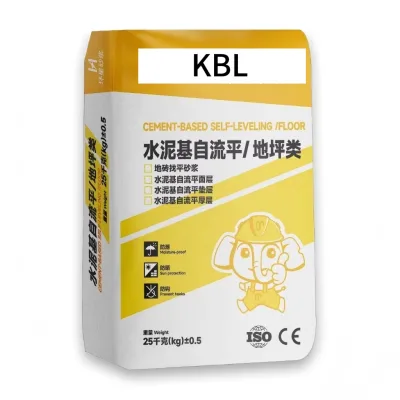
Products are typically packed in 25 kg bags on pallets for easy handling and transport. Some specific models use craft paper combined with pallets, ensuring secure delivery while maintaining the integrity of the dry powder density during shipping.
Where is the self leveling cement compound manufactured?
The product originates from China, with specific manufacturing locations including Ningbo. This origin ensures access to established supply chains while meeting international standards for construction materials used in global infrastructure and commercial building projects.
What is the dry powder density of the self leveling cement compound?
The dry powder density is approximately 1.3 kg per liter, providing a consistent mix for application. This density supports the material's performance characteristics, ensuring reliable flow and leveling properties for smooth floor finishes in various construction settings.